Curious Refuge maps a 2D-over-live-action workflow with Seedance 2.5
A Curious Refuge tutorial describes using a locked live-action edit and reference sheets for Seedance 2.5 shots, with its first generation at 720p for…
Curious Refuge has published a tutorial on a generative AI video workflow for adding 2D animated characters and effects to live-action footage. Curious Refuge describes a Seedance 2.5 workflow based on live-action footage, reference sheets and a structured prompt. The post names Magnific as the upload destination for the first shot’s inputs. For production teams, the useful point is how the work is sequenced. The post says the edit was cut, audio-organised and given a basic grade before any generation. Several generation flaws were then fixed in the edit or in After Effects. For a separate problem involving an over-literal tornado reference, the post describes changing the approach to character references and a text description of the fight.
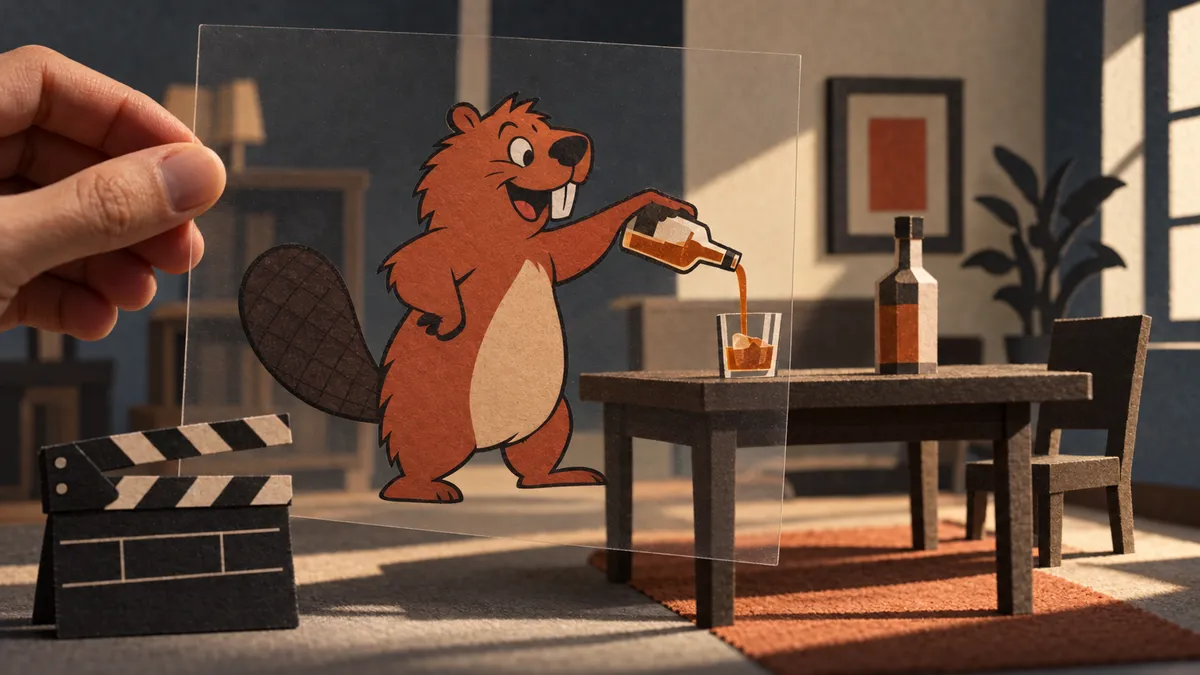
The tutorial follows a short by an instructor identified only as Albert. In it, a cartoon beaver pours a drink, Albert's head explodes into 2D smoke and flames, and an AI stunt double of his real cat fights the beaver. The post ends by promoting Curious Refuge's AI Animation course. Read it as a course provider's demonstration, not an independent evaluation. The source metadata dates the post 29 September 2026. The post does not establish general tool availability beyond the workflow it describes.
The plate supplies camera, depth and scale
According to the post, the live-action footage "gives Seedance the composition, camera movement, depth, and timing." Reference sheets define how the characters and props look, and a structured prompt defines the action. Shots were exported as 720p MP4s with handles on either side. Music and unneeded audio were removed so that Seedance "only received the information we actually wanted it to work with." The generation settings cited for the first shot were 720p, 16:9 and six seconds.
The post credits three plate properties with integrating the flat 2D character into the scene:
- Handheld camera shake. The post recommends preserving the original camera movement.
- Shallow depth of field. The beaver blurs when it reaches into the foreground.
- Object scale. The real bottle was deliberately left in the footage as a size reference for its animated replacement.
The post frames that last choice as an on-set decision: "The decisions you make while filming can give the AI much better information to work with later."
References and timeline-mapped prompts
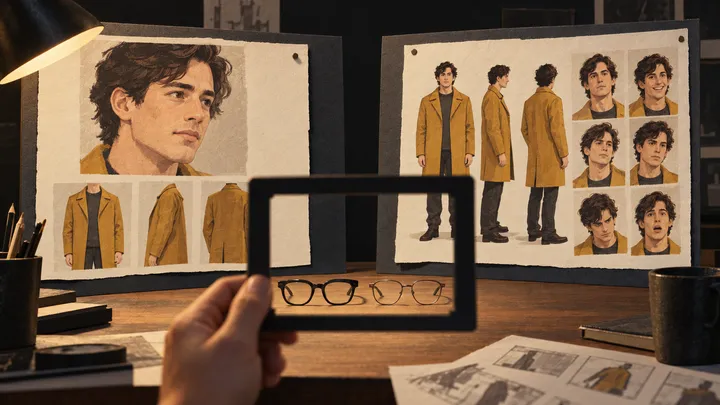
The character reference was a turnaround showing front, side and back views plus a face close-up. The post recommends a neutral grey background and an A-pose rather than a T-pose. Albert cleaned up the turnaround in Photoshop and added an expression sheet built from several generated versions. For props, a frame of the real bottle was given to an image model as a shape reference only. The cat's "AI stunt double" was built from frames of the real footage using the same turnaround process.
Prompts were organised in Crumpet, which the post describes as a free tool Albert built. It maps actions to points along a shot's timeline and stores reusable instructions. The shared instructions told Seedance to preserve the 2D style, use cartoon motion and smear frames, keep the environment live action, and preserve the original camera shake and composition. The aim was to stop the animated elements drifting toward photorealism.
The timeline was also used for continuity in the fight shot. Specific chairs, paintings and objects had to fall to match the next shot, while the table had to stay in place. The post says Albert used the timeline to control what changed and when. It does not detail how closely the final output met each requirement.
Where the generations fell short
| Issue reported | What happened | How it was resolved |
|---|---|---|
| Dirt on Albert's face after the explosion | Persisted "despite several prompting attempts" | Cut around in the edit |
| Cartoon tornado image reference | Taken "too literally", producing a flat 2D tornado moving across the screen | Changed approach: character references used and the fight described in text |
| Animated whiskey | Changed slightly between shots | Colour and blur adjusted in After Effects |
| Beaver's glass | Disappeared toward the end of one generation | Freeze frame masked, camera tracked and composited back in After Effects |
What the post does not establish
- Delivery resolution: only 720p generations are described. The post gives no upscaling or finishing path.
- Cost and iteration counts: the post warns that generation "can get expensive" but gives no figures and no count of generations per shot.
- Rights and licensing: the post gives no terms for Seedance output or for the generated characters.
- Tool availability and pricing: the post gives no plan or access details for the tools it describes, and no pricing details beyond describing Crumpet as free. Current availability and terms should be checked with the tool providers.
Analysis (this publication's inference, not a claim made in the post): The main implication for heads of production is that the planning burden moves earlier in the schedule. Props kept for scale, preserved camera movement and a locked edit all shape what the generation can do. In the workflow described, conventional editing and compositing still did part of the finishing work. Teams adopting a similar approach should plan for that work rather than expect generation to replace it.
Frequently asked questions
How does Curious Refuge's Seedance 2.5 workflow add 2D animation to live-action footage?
According to Curious Refuge's tutorial, the live-action footage gives Seedance 2.5 the composition, camera movement, depth and timing. Reference sheets define how characters and props look, and a structured prompt defines the action. The edit was cut, audio-organised and given a basic grade before any generation. Shots were exported as 720p MP4s with handles, with music and unneeded audio removed. The first shot was generated at 720p, 16:9 and six seconds. The post describes a course provider's demonstration, not an independent evaluation.
What went wrong with the Seedance generations in the Curious Refuge 2D-over-live-action tutorial, and how was it fixed?
The tutorial reports four issues. Dirt on the instructor's face persisted after the explosion despite several prompting attempts, and was cut around in the edit. A cartoon tornado image reference was taken too literally, so Albert switched to character references and a text description of the fight. The animated whiskey changed slightly between shots and was corrected with colour and blur adjustments in After Effects. The beaver's glass disappeared late in one generation and was restored in After Effects using a masked freeze frame and camera tracking.
What does the Curious Refuge Seedance 2.5 tutorial not cover?
The tutorial describes only 720p generations and gives no upscaling or finishing path. It warns that generation can get expensive but gives no cost figures or generation counts per shot. It sets out no rights or licensing terms for Seedance output or the generated characters, and no pricing, plan or access details for the tools it uses. Crumpet's free status is the post's own description.
AI-assisted, reviewed by Codex (one-time review authorized by JJ Rooney) on 7 October 2026.